
Logical style exploration#
You can explore content from a logical perspective by using the OSAID model to analyze logic further. You can visualize logic using a logic tree, and you maywant to look in more detail at the mathematics behind your topics. Let’s explore these further:
-
Analyze the logic. Look at the logic within your learning material. Don’t always accept that your material is correct. Much material is still only the expressed beliefs of the author. Use the following OSAID model to probe the author’s logic, as well as your own logic. OSAID is a mnemonic for:
-
Objective reasoning. Does the author base an argument on facts? Questions: How do you know they are facts? Could they be opinions or assumptions?
-
Subjective reasoning. Does the author base an argument on personal opinions or the opinions of others? Questions: Do you believe the source? How reliable is it?
-
Assumptive reasoning. Does the author base an argument on assumptions? Questions: Whose assumptions? What if these are wrong?
-
Inductive reasoning. Does the author provide a reasonable conclusion by noting some specific cases? Questions: Can you think of cases that disprove the conclusion?
-
Deductive reasoning. Does the author provide a specific conclusion based on principles accepted to be true? Questions: Are the principles correct? Is it a logical step from the principles to the conclusion?
These questions can help you test the underlying logic of your learning material, rather than just accepting everything at “face value.”
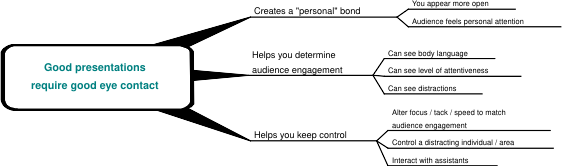
- Create a logic tree. A logic tree is a diagram that starts with a key statement, and then branches out with further logic or points that support that statement. If you want to go further with this, find more information on using deductive or inductive reasoning. Find why it’s important that each branch is MECE (mutually exclusive and collectively exhaustive). See the diagram below for an example of a logic tree.
- Play with numbers. If you are more mathematically minded, explore some topics by numbers. For example, use a spreadsheet program to graph mathematical formulas or information from your training.