
The Aural Style—sound and music#
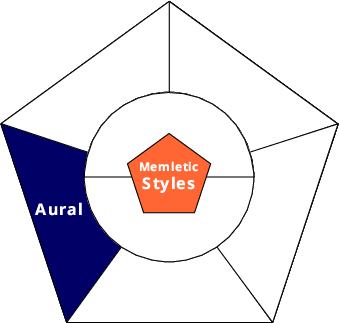 If you use the aural style, you like to
work with sound and music. You have a good sense of pitch and rhythm.
You typically can sing, play a musical instrument, or identify the
sounds of different instruments. Certain music invokes strong emotions.
You notice the music playing in the background of movies, TV shows and
other media. You often find yourself humming or tapping a song or
jingle, or a theme or jingle pops into your head without prompting.
If you use the aural style, you like to
work with sound and music. You have a good sense of pitch and rhythm.
You typically can sing, play a musical instrument, or identify the
sounds of different instruments. Certain music invokes strong emotions.
You notice the music playing in the background of movies, TV shows and
other media. You often find yourself humming or tapping a song or
jingle, or a theme or jingle pops into your head without prompting.
Some pursuits that use the aural style are playing, conducting, or composing music, and sound engineering (mixing and audiovisual work).
Common phrases#
You may use phrases like these:
| - That rings a bell. | - Clear as a bell. |
| - It’s coming through loud and | - That’s music to my ears. |
| clear. |
Learning and techniques#
If you are an aural learner, use sound, rhyme, and music in your learning. Focus on using aural content in your association and visualization.
Use sound recordings to provide a background and help you get into visualizations. For example, use a recording of an aircraft engine running normally, playing loudly via a headset, to practice flight procedures. Use a recording of the sound of wind and water when visualizing sailing maneuvers. If you don’t have these recordings, consider creating them while next out training.
When creating mnemonics or acrostics, make the most of rhythm and rhyme, or set them to a jingle or part of a song.
Use the anchoring technique to recall various states that music invokes in you. If you have some particular music or song that makes you want to “take on the world,” play it back and anchor your emotions and state. When you need the boost, you can easily recall the state without needing the music.